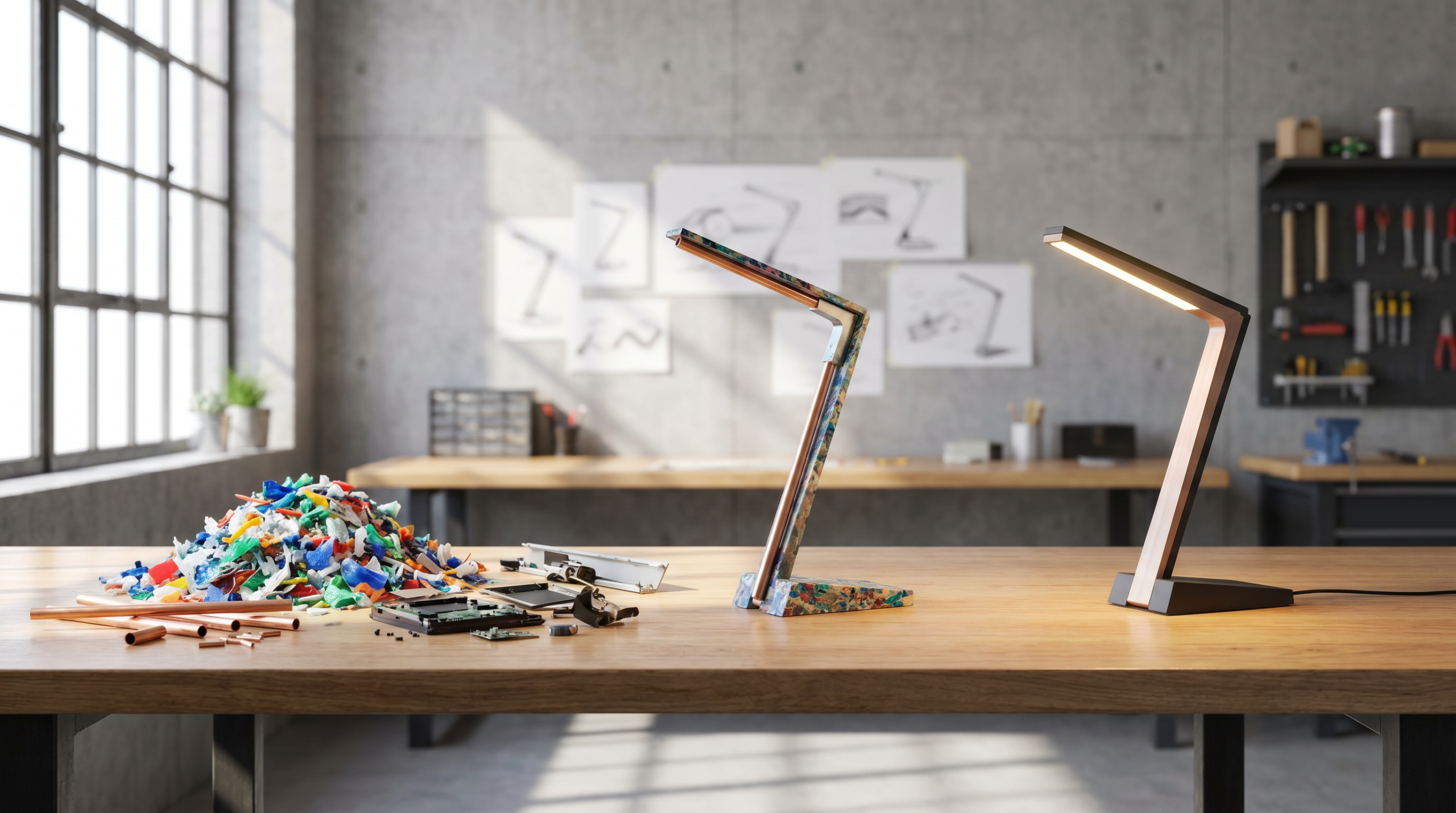
Upcycling, Recycling, and the Value Question
It helps to start by distinguishing three words that often get tangled. Recycling breaks a material down to its raw form to make something new — a process that usually loses quality, so a plastic bottle becomes a lower-grade product (a step sometimes called downcycling). Upcycling, by contrast, takes a discarded object and creatively transforms it into something of equal or greater value without breaking it down — the T-shirt becomes a stylish bag, the pallet a piece of furniture. The crucial difference is that upcycling adds value through design and imagination rather than just recovering material.
That distinction is itself a worthwhile lesson, but its real power is what it unlocks. Because upcycling keeps the object largely intact and asks “what else could this be?”, it shifts the student from consumer to creator and from passive disposal to active invention. A pile of “waste” stops being garbage and becomes a box of raw materials and possibilities. This reframing — seeing potential where others see trash — is the foundational mindset of innovation, and upcycling installs it through hands-on making rather than abstract instruction.
Waste Is a Design Flaw
One of the most liberating ideas a young person can encounter is that waste is not inevitable — it is the result of design choices. In nature there is no waste; the output of one organism is the input of another. Our economy, by contrast, runs largely on a “take-make-waste” model: we extract materials, make products, and throw them away. But as the Ellen MacArthur Foundation argues, when something becomes waste, it is usually because no one designed a next life for it. Treat waste as a design flaw, and suddenly it becomes something we can fix — by designing better in the first place, or by creatively giving discarded things a new purpose.
This is the core insight of the circular economy, a model in which materials are kept in use and never become waste, in contrast to the wasteful linear model. Upcycling is the circular economy made tangible and immediate — a student literally keeping a material in circulation by giving it a new, valuable form. When a class internalizes that waste is a design problem they have the power to solve, they begin to look at every discarded thing differently. The empty jar, the cardboard box, the broken umbrella become not garbage but design challenges waiting for a clever answer. That shift from helplessness to agency is profound.
Design Thinking, Step by Step
Upcycling shines brightest as a way to teach design thinking, the human-centered, iterative problem-solving process used in product design, engineering, and innovation everywhere. Design thinking unfolds in stages, and an upcycling project walks students through every one of them naturally. The first stage is to empathize and define — to identify a real need or problem worth solving. Rather than making a random craft, students ask: what does someone actually need? A way to organize supplies, a planter for the garden, a gift, a product people would buy? Anchoring the project in a genuine need is what separates design from mere decoration.
Next comes ideate — brainstorming many possible solutions using the waste materials at hand, deferring judgment and chasing quantity and wild ideas before narrowing down. Then prototype: students build a rough first version, getting their hands on the materials and discovering what actually works versus what only sounded good. Finally, they test: they try the prototype, gather feedback, find the flaws, and refine. The magic is in the loop — design thinking is iterative, and the first prototype is almost never the final answer. Students learn that good design comes from cycles of trying, failing, and improving, not from a single flash of genius. That lesson alone is worth the entire project.
The Design Thinking Loop
1. Empathize & Define. What real need could this waste material meet?
2. Ideate. Brainstorm many possibilities — quantity over judgment.
3. Prototype. Build a rough first version and see what really works.
4. Test & Refine. Gather feedback, fix the flaws, and loop again.
Creativity Thrives Under Constraints
There is a beautiful paradox at the heart of upcycling: limits make people more creative, not less. Handed unlimited materials and a blank brief, students often freeze — too many options, no starting point. But handed a specific pile of waste and told “make something useful from this,” they spark. The constraint becomes a creative prompt. The fixed shape of a glass jar, the rigidity of a wooden pallet, the flexibility of fabric scraps — each limitation channels imagination toward inventive solutions that pure freedom never would. This is one of the best-documented truths in the study of creativity, and upcycling demonstrates it firsthand.
Working within constraints also mirrors the real world, where designers and engineers almost never have infinite resources. They must solve problems with the budget, materials, and limits they’re given — and the cleverest solutions come from working with constraints rather than wishing them away. A student who has figured out how to turn an awkward, specific piece of waste into a genuinely useful object has practiced exactly the kind of resourceful, adaptive thinking that defines great innovation. They learn that creativity is not about having everything you want; it’s about doing something remarkable with what you have. This is a quietly profound lesson for a generation surrounded by messages that the answer to every problem is to buy something new — upcycling shows them that the answer is often already in their hands, waiting to be reimagined, and that ingenuity matters more than acquisition.
| Design Thinking Stage | What Upcycling Teaches |
|---|---|
| Empathize & define | Identifying real needs; purposeful design over random craft |
| Ideate | Divergent thinking, brainstorming, seeing possibility in waste |
| Prototype | Hands-on making; turning an idea into a real object |
| Test & refine | Iteration, feedback, and learning from failure |
| Working with materials | Creativity under constraints and resourcefulness |
From Idea to Real Product
What elevates upcycling from a craft activity to genuine innovation training is taking it all the way to a finished, functional product. The goal is not just to make something that looks interesting but something that works — that solves the problem it was designed for and that someone would actually use. This forces students to balance function and aesthetics, durability and appearance, just as real product designers must. A bag has to hold things; a planter has to drain; a lamp has to light. Meeting those real requirements with repurposed materials is a serious design challenge that rewards careful thinking.
Ambitious classes can push further still, into the territory of entrepreneurship and circular design. Students can refine their upcycled products to a quality worth selling, brand and present them, and even run a small market — discovering that yesterday’s waste can become today’s value, not just metaphorically but literally. This connects upcycling to the booming real-world field of sustainable design, where designers and companies build entire businesses on turning discarded materials into desirable products. Students see that environmental responsibility and creative, even commercial, success are not opposites but can reinforce each other — a hopeful and motivating discovery.
Innovation for a Circular Future
The skills an upcycling project builds — creative problem-solving, design thinking, resourcefulness, and a circular mindset — are exactly the ones the future will demand. As the world confronts the limits of the take-make-waste model, the ability to design products and systems that keep materials in use is becoming one of the most valuable capabilities in the economy. The designers, engineers, and entrepreneurs who can look at a waste stream and see a resource will be the ones who build the circular industries of tomorrow. Upcycling, modest as it looks, is early practice for that work.
There is also a deeper disposition at stake. A student who has repeatedly turned trash into something valuable develops an innovator’s eye — a habit of seeing opportunity and possibility where others see only problems and dead ends. That optimistic, creative, solution-seeking stance is perhaps the single most important thing education can cultivate, because it applies to every challenge a person will ever face. Upcycling teaches it through the most satisfying of feedback loops: you start with something headed for the bin, and you end holding proof that creativity can transform what already exists into something better.
One Project, Many Subjects
A real strength of upcycling is how naturally it pulls together subjects that are usually taught in separate boxes. In science, students investigate the properties of their materials — which plastics are food-safe, why some glues bond certain surfaces, how structure affects strength — and explore the environmental science of waste and the circular economy. In math, they measure, calculate dimensions and angles, estimate materials, and, if they sell their products, work out costs, pricing, and profit. The making itself is applied geometry and engineering, demanding that a design actually hold together under real use.
The reach extends further still. In art and design, students grapple with color, form, composition, and the balance of beauty and function that defines good design. In language arts, they pitch their ideas, write descriptions, and tell the story of their product — persuasion and communication built into the project. In social studies and business, they confront consumerism, sustainability, and the economics of the circular model, and may even practice marketing and entrepreneurship. Because all of this lives inside a single, hands-on project the students care about, the learning feels integrated rather than fragmented — a real problem solved with every tool a school has to offer. That integration is exactly what modern, project-based education aims for, and upcycling delivers it with unusual ease and joy.
Frequently Asked Questions
What’s the difference between upcycling and recycling?
Recycling breaks a material down to make something new, often of lower quality. Upcycling creatively transforms a discarded object into something of equal or greater value without breaking it down — adding value through design rather than just recovering material.
What materials work well for classroom upcycling?
Clean, safe, easy-to-work materials are ideal: cardboard, glass jars, fabric scraps, plastic containers, wood offcuts, and packaging. The constraint of using whatever is available is part of what sparks creativity.
How is upcycling connected to design thinking?
An upcycling project naturally follows the design thinking process — defining a need, brainstorming ideas, prototyping with materials, and testing and refining — making it an ideal, hands-on way to teach this powerful problem-solving method.
See Treasure Where Others See Trash
Upcycling is innovation in miniature. It hands students a pile of “waste” and a real problem, then walks them through the full creative arc — define, imagine, build, test, refine — that designers and engineers use to change the world. Along the way it teaches the most empowering idea of all: that waste is a design flaw, and design flaws can be fixed.
Give students a box of discards and the freedom to reimagine them, and you give them more than a craft. You give them the innovator’s eye — the habit of seeing possibility everywhere — and the design-thinking method to act on it. That’s a creative superpower, and it starts with a single piece of trash that refuses to stay trash.
The best raw material for innovation is what we threw away.
This article is for general educational purposes. For more on circular design and waste reduction, see the Ellen MacArthur Foundation, its guidance on eliminating waste and pollution, and the U.S. EPA’s Reducing and Reusing Basics. Supervise students when using tools and craft materials.
Leave a Reply