Why the Local Beat Is the Best Beat
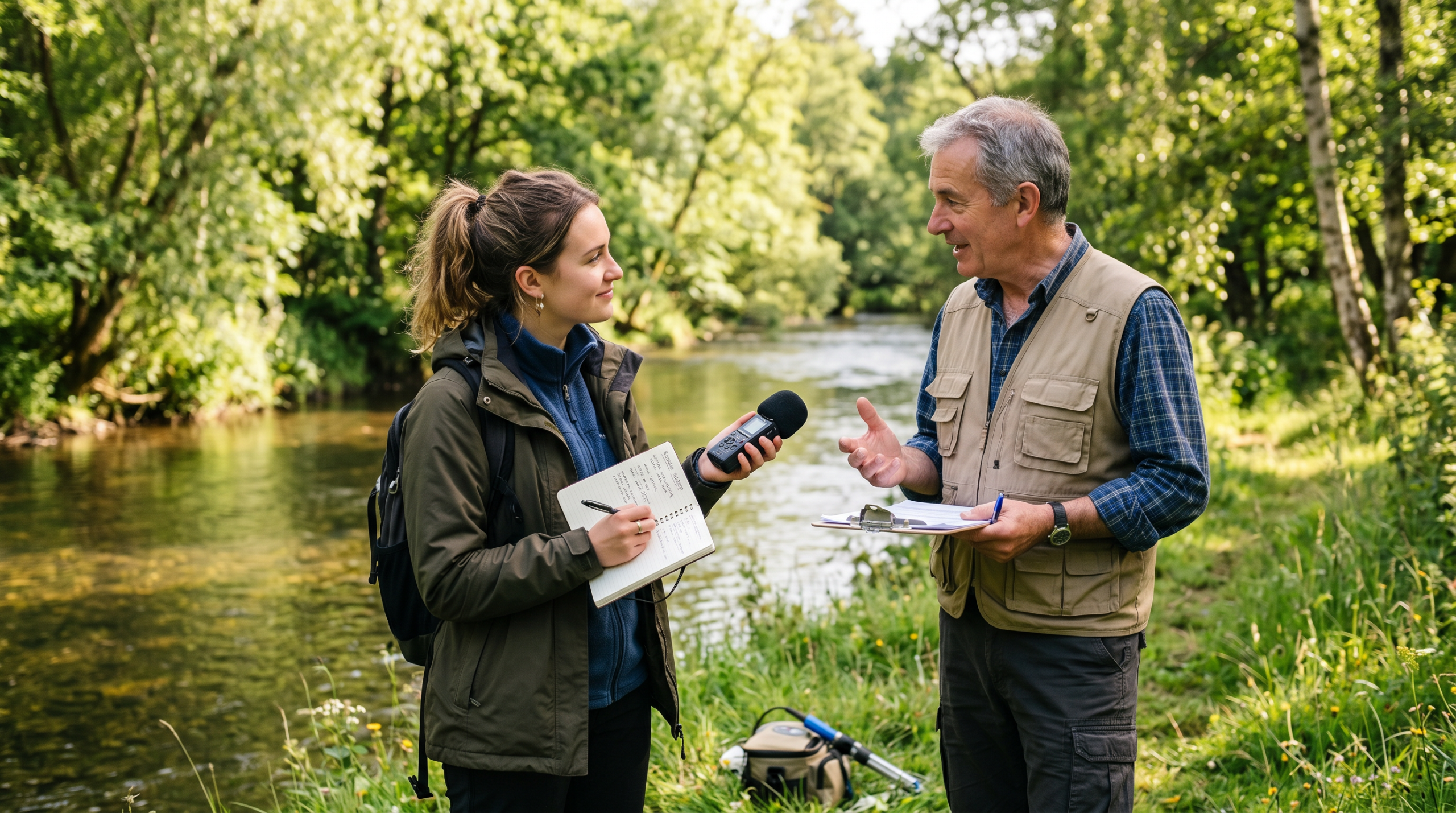
Climate change can feel impossibly large and abstract to a student — a global problem measured in centuries and continents. Local environmental journalism solves that by bringing it home. When students report on the issues affecting their own community — the flooding on a familiar street, the air quality near their school, the health of a nearby river, the fate of a local green space — the abstract becomes concrete and personal. They can see it, visit it, and talk to the people it affects. This local focus is what makes the work engaging and the learning deep, because the student is not regurgitating distant facts but investigating something real in their own world.
There is a reason professional environmental journalism prizes local reporting: it connects the global to the lived. As organizations supporting student journalism have observed, reporting humanizes what can otherwise seem too technical or remote, linking shared challenges to local realities in ways that foster understanding and action. A student journalist covering their town’s environmental story learns to see the threads that connect a worldwide issue to a single neighborhood — and to make readers feel that connection too. That skill, of grounding the big in the specific, is at the heart of all good journalism and much good thinking.
The Research Skills of a Reporter
Before a journalist writes a word, they research — and the research skills journalism demands are rigorous, transferable, and increasingly rare. A student reporting on a local environmental issue must gather information from many kinds of sources and weigh them against each other. They learn to find and read primary documents: government data, scientific reports, public records, and the figures published by agencies like NASA, NOAA, and the EPA. They learn to evaluate sources for reliability and bias, distinguishing a peer-reviewed study or an official dataset from a press release or an opinion. In an age of rampant misinformation, this ability to judge whether a source can be trusted is one of the most important skills a person can possess.
Journalism also teaches a research method most school assignments never touch: the interview. To report a local story, students must talk to real people — scientists, officials, business owners, activists, and ordinary residents affected by the issue. Conducting a good interview is a genuine skill: preparing thoughtful questions, listening closely, following up on what’s said, and drawing out information and human perspective. Students learn to seek out multiple viewpoints, to represent disagreement fairly, and to build a complete picture from many partial accounts. They learn the journalist’s discipline of verification — checking claims against evidence, confirming facts with more than one source, and refusing to print what they cannot stand behind. This combination of document research, source evaluation, interviewing, and verification is, in effect, a complete toolkit for finding out what’s true — the foundational skill of every knowledge profession.
The Reporter’s Toolkit
Source research. Finding and reading data, documents, and credible reports.
Source evaluation. Telling reliable evidence from spin, bias, and rumor.
Interviewing. Asking, listening, and drawing out facts and perspective.
Verification. Confirming claims with evidence and multiple sources.
Communicating Clearly to a Real Audience
Research is only half of journalism; the other half is communication, and writing for readers is a fundamentally different and more demanding task than writing for a teacher. A student journalist must take what they’ve learned — often complex, technical, and tangled — and make it clear, accurate, and compelling to a general audience. They learn to translate jargon and data into plain language without losing the truth, a skill that requires understanding the material deeply enough to explain it simply. They learn structure: how to open with a hook, organize information so it flows, and lead with what matters most. They learn that clarity is a form of respect for the reader, and that confusing writing usually signals confused thinking.
Crucially, journalism teaches students to write for an audience beyond the classroom, which changes everything. When a piece may actually be read by the community — published in a school paper, a local outlet, or online — students write with a care and purpose that assignments graded by one teacher rarely inspire. They learn to consider what their readers know and need, to anticipate questions, and to earn trust through accuracy and fairness. They also confront the ethical dimensions of communication: the responsibility to be truthful, to represent people fairly, to separate fact from opinion, and to avoid sensationalism even when a scary headline would draw more clicks. These are the standards of professional journalism, and practicing them builds not just better writers but more responsible communicators — a quality the wider information ecosystem badly needs.
Storytelling That Moves People
The best environmental journalism does more than convey facts — it tells stories that make people care, and learning this craft is a profound education in persuasion and empathy. Students discover that data alone rarely changes minds, but a well-told story about real people facing a real problem can. They learn to find the human angle in an environmental issue: the family whose home floods, the small business affected by a drought, the students breathing the air near a busy road. They learn to use vivid detail, narrative, and voice to bring an issue to life, while keeping the storytelling honest and grounded in fact rather than manipulation.
This blend of rigor and storytelling is a rare and valuable combination. Students learn that being accurate and being compelling are not opposites — that the goal is to be both truthful and engaging, to inform and to move. They develop empathy by seeking out the perspectives of people unlike themselves and representing those perspectives faithfully. And they discover the genuine power of communication: that a clear, well-reported, well-told story can inform a community, spark a conversation, and even prompt action. For a student to experience their own words having a real effect on real people is among the most motivating experiences education can offer, and it teaches a lifelong respect for the responsibility that comes with the power to communicate. It is one thing to be told that words matter; it is another to write a story that a neighbor reads, a council member responds to, or a classmate is moved by — and to feel, in that moment, the weight and the privilege of being trusted to tell the truth.
| Journalism Task | The Skill It Builds |
|---|---|
| Investigating a local issue | Research, source evaluation, and critical thinking |
| Interviewing sources | Listening, questioning, and gathering perspective |
| Checking the facts | Verification, accuracy, and intellectual honesty |
| Writing the story | Clear communication and translating complexity |
| Telling it well | Storytelling, empathy, and ethical persuasion |
Skills for Far More Than Journalism
Although few students will become professional journalists, the abilities that climate reporting builds are universal. The capacity to research thoroughly, evaluate sources, and verify claims serves a student in every academic discipline and nearly every career. The ability to interview — to ask good questions and listen well — serves anyone who must work with people. And the skill of clear, honest, compelling communication is among the most sought-after and least common abilities in the entire job market. A scientist who can explain their work, a manager who can write a clear memo, an advocate who can move an audience — all are using the very skills a student journalist practices.
There is also a civic dimension that may be the most important of all. In an era of misinformation and shrinking local news coverage, teaching students to do careful, honest reporting builds something society urgently needs: people who can distinguish reliable information from noise, who value truth and fairness, and who can hold institutions accountable through evidence. A student who has experienced the discipline of verifying a fact before publishing it becomes a more discerning consumer of information for life, and perhaps a defender of the truthful, evidence-based public conversation that a healthy democracy depends on. Local environmental journalism, modest as it seems, is training in citizenship as much as in craft.
How to Launch a Student Newsroom
Starting student climate journalism is refreshingly low-cost — the main requirements are curiosity and a commitment to accuracy. Begin by helping students identify a real local environmental issue worth investigating, ideally one they can actually access: a nearby waterway, a local park, the school’s own energy or waste, a recent weather event. Teach the basics of sourcing — how to find reliable data, how to evaluate a source, how to request an interview — and set clear standards for accuracy and fairness from the start. A short, well-reported piece on a single concrete question is a far better first project than a sweeping take on global climate change.
From there, give the work a real audience and a real process. Publishing student pieces — in a class blog, a school paper, a newsletter, or a community outlet — transforms the assignment into genuine journalism with genuine stakes, and resources from organizations that support student environmental reporting, like the Pulitzer Center, can offer guidance and inspiration. Pair students into reporting teams, build in editing and fact-checking steps that mirror a real newsroom, and treat each story as a chance to practice the full cycle from question to published piece. Treat the first stories as a learning run, refine the process, and let a culture of careful, honest reporting take root — one that produces both better writers and more thoughtful citizens.
Frequently Asked Questions
Do students need journalism experience to start?
No. The core habits — asking questions, finding reliable sources, interviewing, checking facts, and writing clearly — can be taught from scratch. Starting with a small, concrete local story lets students learn the craft step by step.
What makes a good local environmental story?
A specific, accessible issue that affects real people the students can reach — a local waterway, air quality, a park, a weather event, or the school’s own footprint. Concrete and local beats broad and global for a first story.
How do students find reliable information?
By turning to authoritative sources — government agencies, scientific institutions, and official data — and by interviewing knowledgeable people, then verifying claims across multiple sources. Learning to judge a source’s reliability is a central part of the work.
Report the Truth, Build the Skills
Student climate journalism turns a local environmental question into a complete education in finding and telling the truth. Students research like investigators, interview real people, verify their facts, and write to be understood — building the research and communication skills that serve in every field and that a misinformed world badly needs.
Hand a student a real question about their own backyard and the standards of honest reporting, and watch them grow into careful researchers and clear, ethical communicators. Their stories may inform a community — and the habits they build will inform the rest of their lives. The beat is local; the skills are for everywhere.
Find out what’s true, then make it clear.
This article is for general educational purposes. For reliable data and reporting resources, see NASA’s Global Climate Change site, NOAA’s Climate.gov, the Society of Environmental Journalists, and the Pulitzer Center. Supervise student reporting and follow your school’s guidelines for interviews and publication.
Leave a Reply