More Than Gardening: Running a Tiny Farm Business
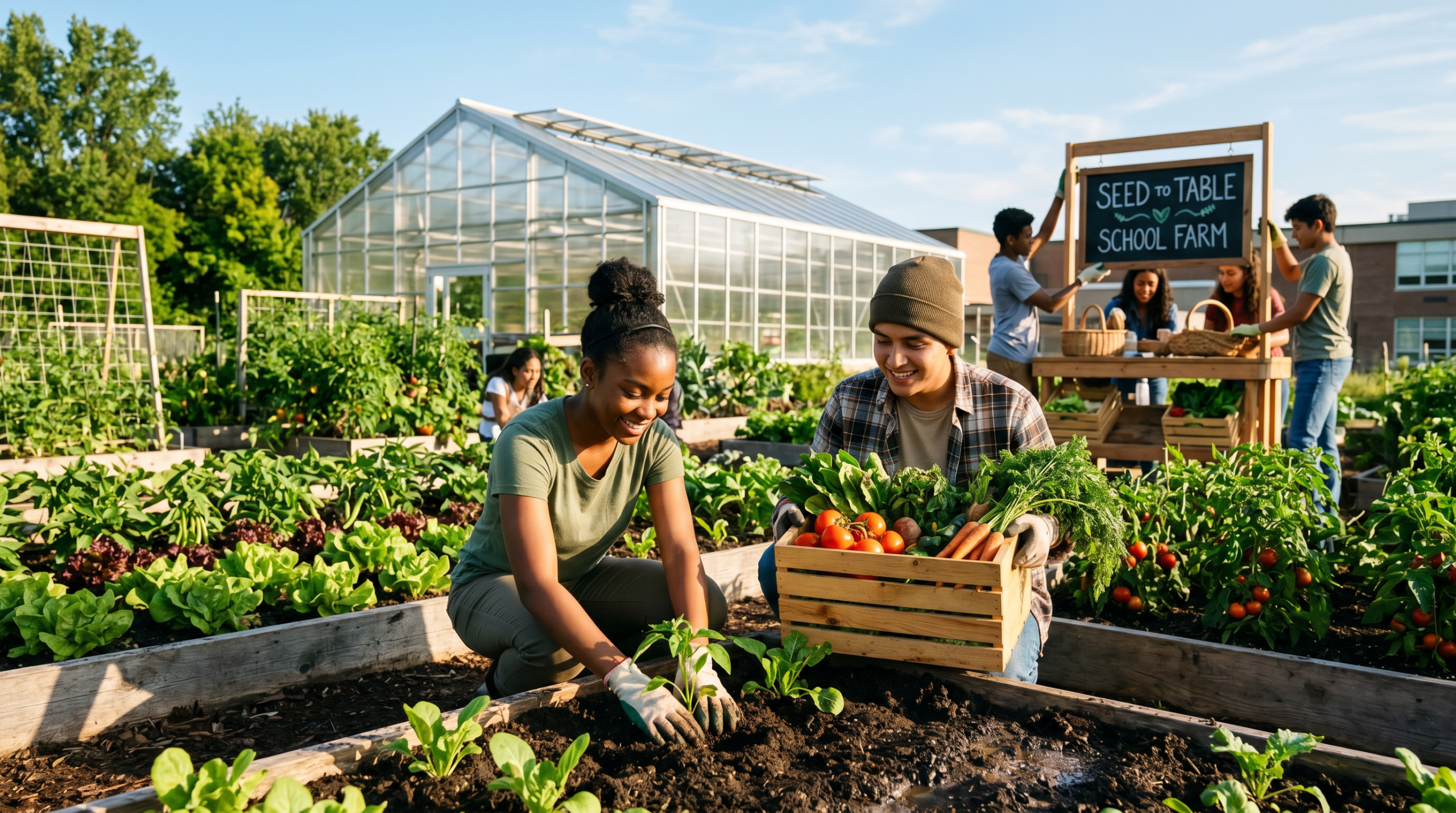
A school garden grows food. A student-run farm project grows food and takes it to market — and that single addition changes everything. The moment a crop is destined to be sold, whether at a farmers’ market stall, through a small subscription box for families, or to the school cafeteria itself, students inherit the full set of questions a real farmer faces. What should we grow that people will actually buy? How much will it cost us, and what should we charge? How do we harvest, package, and present it? How do we handle the money, and what do we do with the profit? Suddenly the garden is not a hobby but an operation with stakes.
This is the seed-to-table journey in full: plan the crops, prepare the soil, plant, tend, harvest, prepare the product, sell it, and reinvest what you earn into the next season. Each stage demands a different set of skills, and together they form one of the most complete, authentic learning experiences a school can offer. The student-run farm sits at the intersection of agriculture, business, and environmental science — a place where a math lesson, a marketing decision, and a question about soil health all live inside the same project. The USDA’s Farm to School program, now active in more than 67,000 schools, exists in large part because this kind of integrated, hands-on learning works.
The Business Hidden in a Vegetable Bed
Entrepreneurship is often taught with hypotheticals — imaginary lemonade stands and invented companies. A student farm makes it real, with actual products, actual customers, and actual money. The lessons begin before a single seed goes in the ground, with planning: students research which crops grow well in their climate and season, which ones sell, and how much space and time each requires. This is market research and production planning rolled into one, and getting it wrong has visible consequences — plant something no one wants, or that won’t mature in time, and the whole enterprise suffers.
Then comes the financial heart of the project: costs, pricing, and profit. Students tally what they spend on seeds, soil amendments, and supplies, and weigh it against what they can earn. They confront pricing as a genuine puzzle — charge too much and customers walk away, too little and the work isn’t worth it. They learn the difference between revenue and profit, what it means to break even, and why a business has to cover its costs before it earns anything. When the harvest is sold and the money counted, students experience profit and loss not as vocabulary but as the direct result of their own decisions, which is a far more durable way to learn it.
The Entrepreneur’s Checklist
Plan. Research crops, demand, season, and space — production meets market research.
Budget. Track costs against expected revenue; understand profit, loss, and breaking even.
Sell. Set prices, present the product, and persuade real customers.
Reinvest. Decide what to do with the profit — the cycle of a growing business.
Selling is its own education. Standing behind a market table, students learn customer service, marketing, and persuasion — how to display produce attractively, describe what makes it special, and handle transactions and make change. They discover that a product doesn’t sell itself, that presentation and a good story matter, and that a satisfied customer comes back. These are soft skills that no worksheet can deliver, learned under the gentle pressure of real people deciding whether to buy. For many students, it is the first time their schoolwork has produced something a stranger was willing to pay for — a powerful, confidence-building moment.
Stewardship: Farming That Gives Back
If entrepreneurship is one half of the student farm, environmental stewardship is the other — and the two are deliberately taught together, because real, lasting farming depends on caring for the land rather than exhausting it. A student farm makes this concrete. Students learn that the soil is a living resource that can be built up or worn out, and that practices like composting, crop rotation, and cover cropping replenish it rather than deplete it. They see that the health of next year’s harvest depends on how they treat the ground this year — a direct, visible link between responsibility and reward.
Stewardship extends to every input and inhabitant of the farm. Students learn to use water wisely, to welcome pollinators and beneficial insects instead of reaching first for chemicals, and to value biodiversity as a defense against pests and disease. They confront real trade-offs: a quick chemical fix might boost this season’s yield while harming the soil life that sustains future seasons. Wrestling with those choices teaches a mature, long-term way of thinking — the recognition that a farm is a living system you are borrowing from the future, and that good stewardship means leaving it at least as healthy as you found it. Practices that return organic matter to the soil, such as the composting championed by the EPA, let students close the nutrient loop on their own farm.
This is where entrepreneurship and stewardship stop being separate lessons and become one. A truly successful farm enterprise is not the one that squeezes the most out of the land this year; it is the one that stays productive for many years because its owners cared for the soil, water, and ecosystem that make production possible. Students learn that profit and responsibility are not opposites but partners — that a business which destroys its own foundation is not a good business at all. In an age of growing concern about sustainability, that integrated understanding may be the project’s most important gift.
| Project Phase | Skills It Builds |
|---|---|
| Planning the season | Market research, budgeting, crop and resource planning |
| Soil & planting | Soil health, stewardship, long-term thinking |
| Growing & tending | Responsibility, patience, ecological awareness |
| Harvest & selling | Pricing, marketing, customer service, profit and loss |
| Reinvesting & composting | Reinvestment, closing the loop, sustainability |
The Full Cycle: Seed, Grow, Harvest, Sell, Return
What makes a student-run farm so complete as a learning experience is that it is genuinely cyclical — the end of one season feeds the beginning of the next. After the harvest is sold and the profits counted, students face the decision every business owner faces: what to do with the earnings. They might reinvest in better tools, more seeds, or an expansion of the beds; they might donate a share of the produce to a local food bank; they might save toward a bigger project. This is capital allocation in miniature, and it teaches that a sustainable enterprise grows by reinvesting in itself.
The cycle closes ecologically, too. The trimmings, spent plants, and kitchen scraps go to the compost pile, which becomes the soil amendment that enriches next season’s beds — turning the farm’s own waste back into its own fertility. Students watch the loop complete itself: seed becomes plant becomes food becomes sale becomes profit, while the plant’s remains become soil that grows the next seed. Seeing both loops — the financial one and the natural one — turning together is the project’s intellectual climax. It shows, in the most tangible way, that a well-run farm is a system in balance, where business and ecology reinforce rather than fight each other.
Real Outcomes Beyond the Classroom
The benefits of student farm projects reach well past the garden gate. Students gain confidence from having built something real and seen it succeed — an experience of competence that traditional schoolwork rarely provides. They develop a tangible connection to where food comes from and a respect for the labor behind it, which tends to make them more thoughtful eaters and citizens. And they encounter, often for the first time, the idea that they could create economic value themselves rather than only consume it — a seed of entrepreneurial confidence that can grow for years.
There are community benefits as well. When schools sell or donate their produce locally, they strengthen the local food economy and model the kind of sustainable, community-rooted agriculture that the Farm to School movement promotes. Resources from organizations like National Agriculture in the Classroom help teachers connect these projects to academic standards, so the farm earns its place not as an extracurricular novelty but as a serious, standards-aligned vehicle for learning across subjects. The student who planted, grew, sold, and reinvested has practiced the entire life cycle of a responsible enterprise — a rehearsal for adulthood that few classroom activities can match.
How to Launch a Student Farm Enterprise
Starting a student farm project doesn’t require acreage or a big budget — it requires a small, well-chosen beginning. Many schools start with a few raised beds and one reliable, marketable crop, such as salad greens, herbs, or cherry tomatoes, that grows quickly and sells easily. A modest first goal, like supplying fresh herbs to the cafeteria or selling a few salad mixes to families, lets students experience the entire seed-to-sale cycle on a manageable scale before expanding. The aim early on is a complete loop, not a large one.
From there, partnerships and planning carry the project forward. Local farmers, master gardeners, and small-business owners make excellent mentors; parents and community members can help with the market side; and grants through programs like USDA Farm to School can fund growth. Building in the business elements from the start — a simple budget, a price list, a record of sales — ensures the entrepreneurship lessons are as deliberate as the growing ones. Treat the first season as a pilot, learn from what worked and what didn’t, and let the enterprise grow the way a healthy business does: steadily, sustainably, and rooted in good stewardship of everything that makes it possible.
Frequently Asked Questions
Where can a student farm sell its produce?
Common outlets include the school cafeteria, small subscription boxes for families and staff, school-based farm stands, and local farmers’ markets. Some schools also donate a portion to food banks, combining business learning with community service.
What ages are student farm projects suitable for?
They adapt to every age. Younger students can handle planting, tending, and a simple farm stand, while older students can manage budgets, pricing, marketing, and the financial records — taking on more of the real business as they grow.
How do these projects teach environmental responsibility?
By tying success to the health of the land. Students practice composting, crop rotation, water conservation, and pollinator-friendly methods, learning firsthand that a farm stays profitable over time only when its soil and ecosystem are cared for.
Grow a Business, Grow a Steward
A student-run farm is a rare project that teaches two of the most important lessons at once. On one hand, it is a real business — with plans, budgets, customers, and profit — that turns students into confident entrepreneurs. On the other, it is a lesson in caring for the land, showing that lasting success depends on stewardship, not extraction. Together, they form a single truth: do well by doing right.
Begin with a few beds, one crop, and the bold question of whether you can sell what you grow. Run the full cycle once — seed, grow, harvest, sell, reinvest, and return to the soil — and students will have rehearsed, in miniature, the responsible enterprise we hope they’ll build in the world.
From a single seed, a whole education grows.
This article is for general educational purposes. For farm-to-school and agricultural-education resources, see the USDA’s Farm to School Program, the USDA Farm to School introduction, National Agriculture in the Classroom, and the U.S. EPA’s composting resources. Follow local guidance and food-safety rules when selling or donating produce.
Leave a Reply