A Growing Economy That Needs People
The first thing students should understand is that “green jobs” are not a niche or a hope — they are a real and expanding part of the economy. As the world shifts toward cleaner energy, more efficient resource use, and greater environmental responsibility, entire industries are growing and new kinds of work are emerging. The Bureau of Labor Statistics has repeatedly identified clean-energy occupations among the fastest-growing in the country, with roles like wind turbine service technician and solar photovoltaic installer projected to expand far faster than the average occupation. Whole industries built around solar, wind, and energy efficiency are scaling up and competing for workers.
Importantly, this growth is not confined to one corner of the economy. Sustainability work now runs through nearly every sector — energy, construction, agriculture, manufacturing, finance, law, design, transportation, and government. A company may employ sustainability analysts; a farm may need experts in regenerative practices; a city may hire climate-resilience planners. The U.S. Department of Labor notes that workers in green occupations focus on the environment in many different ways, from generating renewable energy to cleaning up pollution to conserving natural resources. For students, this breadth is the key insight: a green career doesn’t mean one job, it means a vast and varied field with a place for almost any interest and talent.
Projects as Career Test-Drives
The reason environmental projects are such powerful career exploration is that they let students do the work, not just read a description of it. A career pamphlet might say “environmental scientists collect and analyze field data,” but a student who has actually run a schoolyard biodiversity survey has been an environmental scientist for an afternoon — observing, recording, identifying, and interpreting. That direct experience tells a student something no brochure can: whether the work itself feels engaging, frustrating, fascinating, or dull to them. There is no better way to discover a vocation than to sample the actual tasks it involves.
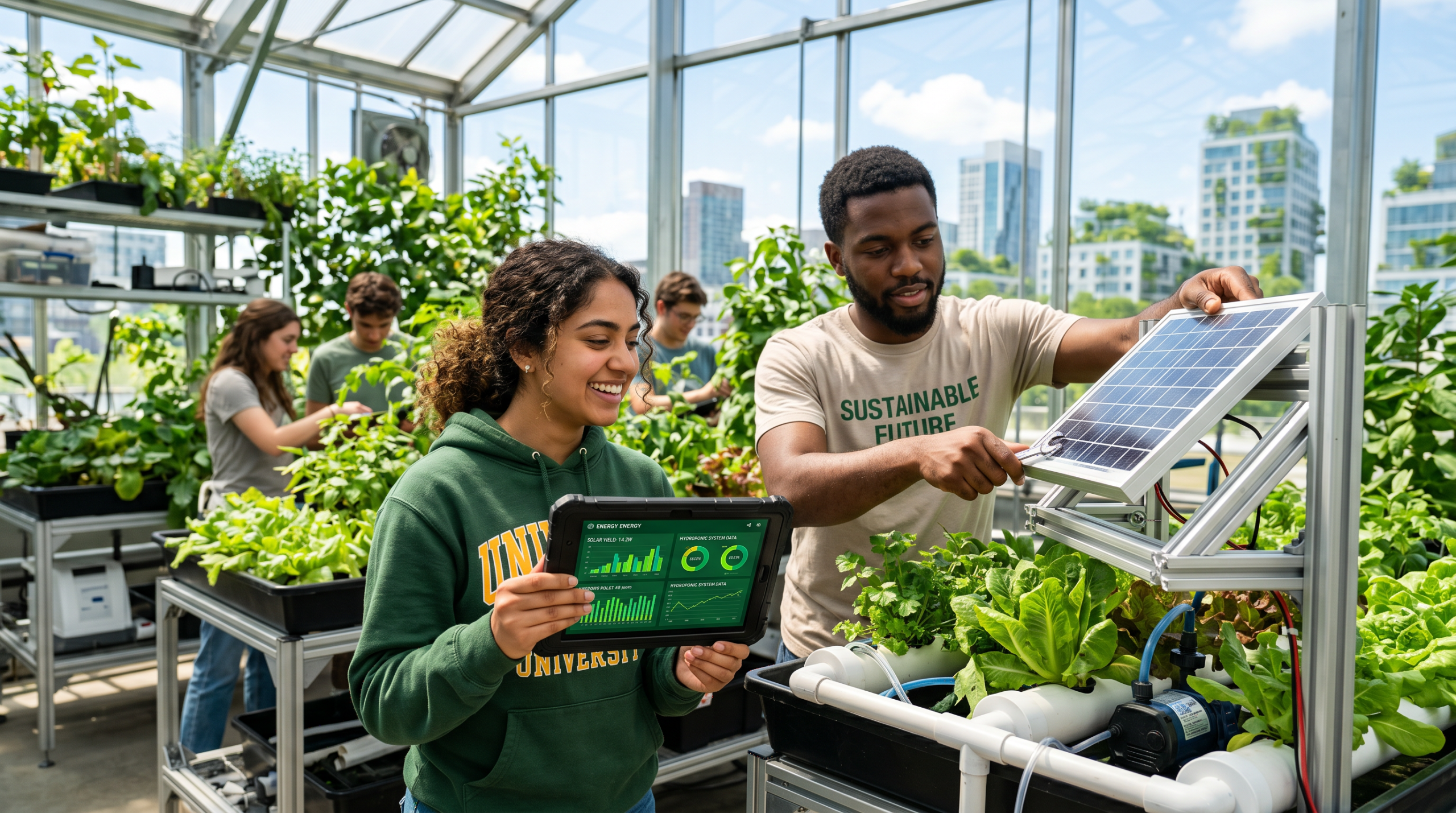
Across a range of environmental projects, students try on a remarkable variety of professional roles. Building and monitoring a solar array touches the work of electricians, engineers, and energy technicians. Conducting an energy audit mirrors the job of an energy analyst or efficiency consultant. Designing a pollinator garden or a restoration plot echoes the work of ecologists, conservationists, and landscape designers. Tracking a carbon footprint resembles the role of a sustainability analyst. Reporting on a local environmental issue is the work of an environmental journalist. Each project is, in effect, a low-stakes test-drive of one or more careers — a chance to feel what the work is like before committing years to training for it.
From Project to Profession
Solar / wind build → renewable-energy technician, electrician, engineer
Energy or carbon audit → energy analyst, sustainability consultant
Garden / restoration → ecologist, conservationist, landscape designer
Data & reporting → environmental scientist, analyst, journalist, policy advisor
Beyond the Obvious Jobs
One of the most valuable things environmental projects do is broaden students’ picture of what a sustainability career can be. Ask a young person to name a green job and they’ll likely say “solar installer” or “park ranger” — real and important roles, but a tiny slice of the field. Hands-on projects reveal the hidden variety. A project that involves measuring and analyzing data shows that sustainability work needs people who are good with numbers and statistics. A project that requires communicating findings shows there’s a place for writers, designers, and storytellers. A project that confronts trade-offs and policy shows roles for economists, planners, and lawyers. Sustainability, students discover, needs every kind of skill.
This realization is liberating, especially for students who care about the environment but don’t see themselves as future scientists or engineers. The green economy needs accountants who can track carbon, marketers who can sell efficiency, attorneys who can navigate environmental law, artists who can make sustainability vivid, and managers who can run green organizations. A student who loves writing can become an environmental journalist; one who loves business can build a sustainable company; one who loves people can lead community programs. By exposing the sheer range of work involved, environmental projects help every student see a possible place for themselves in the field — not just the stereotypical few. A student who assumed the environment was “not for them” because they disliked lab science may discover, through a project, that their talent for organizing, persuading, or designing is exactly what some green career needs. Tools like the BLS Occupational Outlook Handbook let students dig into the details of these many roles once a project has sparked their interest.
Building Real, Transferable Skills
Beyond revealing careers, environmental projects build the actual skills those careers require — and many of these skills transfer across the entire job market. Students who run these projects practice data collection and analysis, problem-solving, project planning, teamwork, and communication. They learn to work with real tools and real constraints, to follow a process from question to result, and to present what they found to others. These are precisely the competencies employers in every field say they want, which means time spent on environmental projects is never wasted even for a student who ultimately chooses a different path.
For students who do pursue green careers, the projects offer an early head start and a way to build a track record. A portfolio of environmental projects — an energy audit, a restoration effort, a data analysis, a published article — is genuine evidence of capability and initiative that stands out on an application to a program or a job. It also helps students make informed choices about further education, having already sampled the work. The data is encouraging here too: the Department of Labor reports that many green occupations offer wages above the median for all workers, so this is a field that can combine meaningful work with a solid livelihood. Students who explore it early are positioning themselves for a sector that is both growing and rewarding.
| Project Experience | Careers It Opens a Window On |
|---|---|
| Renewable energy builds | Technicians, electricians, engineers, project developers |
| Audits & measurement | Energy analysts, sustainability consultants, accountants |
| Ecology & restoration | Ecologists, conservationists, land managers, designers |
| Data & analysis | Environmental scientists, data analysts, researchers |
| Communication & advocacy | Journalists, educators, policy advisors, marketers, lawyers |
Connecting Projects to the World of Work
To turn an environmental project into genuine career exploration, it helps to make the connection explicit. After students complete a project, a teacher can simply ask: “Did you know there are people who do this for a living? Here’s what those jobs are called, what they involve, and how you’d train for them.” This small framing transforms a hands-on activity into a doorway, helping students see the line from what they just did to a possible future. Pairing the project with reliable career information — from sources like the Bureau of Labor Statistics — lets students explore wages, growth projections, and education requirements for the roles their project touched.
Bringing in real professionals deepens the effect dramatically. A guest visit, virtual or in person, from someone working in a green field — a solar installer, an environmental engineer, a sustainability manager, a conservation scientist — lets students see a real person doing the work and ask their own questions. Field trips to renewable-energy sites, nature centers, recycling facilities, or green businesses show careers in their actual setting. Even better, partnerships with local organizations can lead to mentorships, job-shadowing, or internships that turn classroom interest into real-world experience. The project plants the seed of curiosity; these connections help it grow into a concrete sense of possibility.
Work With Purpose
There is a deeper reason green career exploration resonates with students, and it goes beyond job projections and salary figures. Young people increasingly want their work to mean something — to contribute to a cause larger than a paycheck — and the green economy offers exactly that combination of livelihood and purpose. A student who has watched bees return to a garden they planted, or seen a school’s energy bill fall because of an audit they conducted, has felt the satisfaction of work that visibly helps. Environmental projects let students experience that sense of meaning firsthand, which is a powerful motivator and a genuine consideration in choosing a career.
This matters because many students mistakenly believe they must choose between doing good and doing well — between a job that helps the world and a job that pays the bills. Green career exploration dissolves that false choice. It shows students that they can build a stable, well-compensated career while working on problems they care about, and that caring about the environment is not a hobby to be set aside in adulthood but a foundation a whole working life can be built upon. For a generation that often feels anxious and powerless about environmental challenges, discovering that they can spend their careers being part of the solution is genuinely hopeful — it converts worry into agency and direction.
That hope, grounded in real opportunity, is perhaps the most important outcome of all. Students who explore green careers early come away understanding that the transition to a sustainable economy is not just a challenge to be feared but an enormous source of opportunity — new industries to build, new problems to solve, new kinds of work to invent. They begin to see themselves not as passive observers of a changing world but as potential builders of a better one. Whatever path they ultimately choose, that sense of possibility and purpose is a gift that shapes how they approach work, and life, for years to come.
Frequently Asked Questions
Are green jobs really a growing field?
Yes. The Bureau of Labor Statistics has repeatedly projected clean-energy roles like solar installers and wind turbine technicians among the fastest-growing occupations, and sustainability work is expanding across many sectors as industries adopt greener practices.
Do all green careers require a science degree?
No. The field needs a wide range of skills and education levels — from skilled trades and technicians to writers, business professionals, lawyers, and designers. There’s a place in sustainability for almost any interest and background.
How do environmental projects help with career exploration?
They let students actually do the kind of work green careers involve — collecting data, building systems, analyzing problems — so they can discover what they enjoy and build relevant skills, rather than just reading job descriptions.
Try the Work, Find the Future
Environmental projects are career exploration in disguise. By letting students actually do the work of the green economy — building, measuring, analyzing, restoring, reporting — they reveal a vast and growing field of meaningful jobs and help each student discover where their own talents might fit. No brochure can do what an afternoon of real work does.
Make the connection explicit, bring in real professionals, and point students to reliable career data, and a simple project becomes a glimpse of a possible future. In an economy increasingly defined by sustainability, helping students see themselves in this work may be one of the most practical gifts a school can give.
The green economy needs every kind of talent — maybe yours.
This article is for general educational purposes. For career data, see the U.S. Bureau of Labor Statistics’ Green Jobs resources and Occupational Outlook Handbook, and the U.S. Department of Labor’s overview of environmentally focused occupations. Wage and growth figures change over time; check current sources.
Leave a Reply